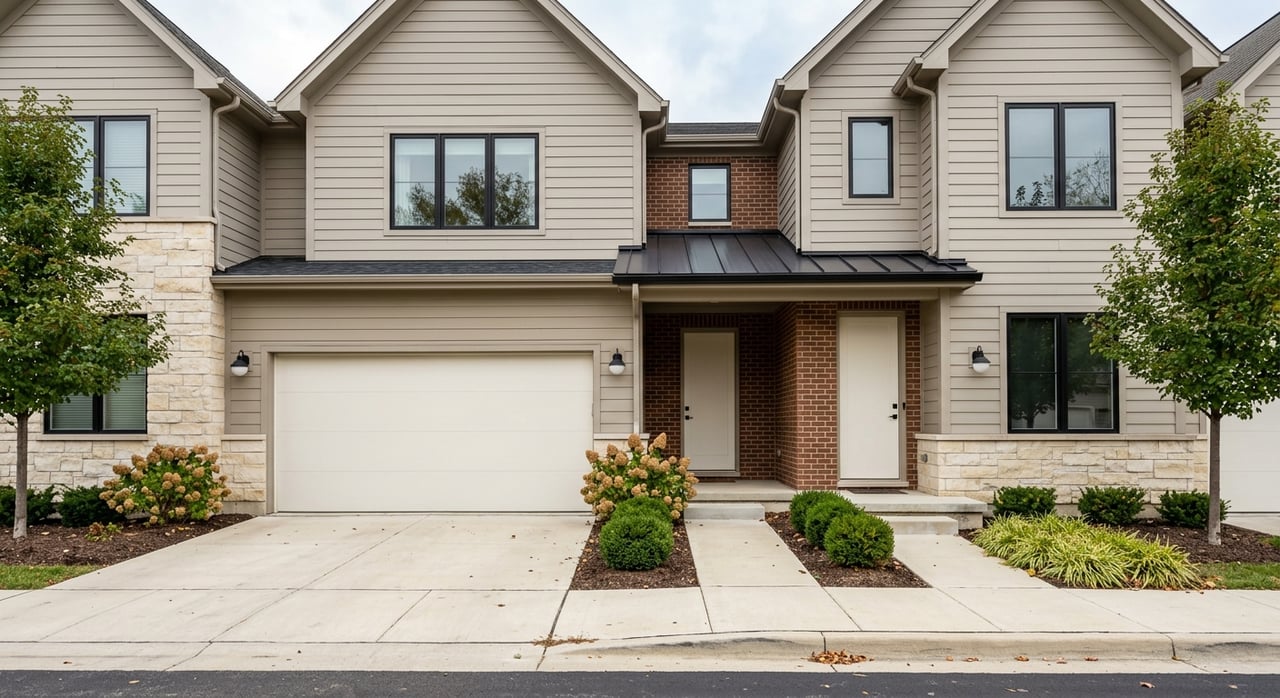
Looking for a home in Carmel but do not want the full upkeep of a detached house? You are not alone. For many buyers, condos and townhomes offer a smart path into some of Carmel’s most amenity-rich areas, but the details matter more here than many people expect. This guide will help you understand pricing, locations, layouts, HOA tradeoffs, and rental rules so you can buy with confidence. Let’s dive in.
Why Carmel attached homes stand out
In Carmel, condo and townhome living is less about broad citywide walkability and more about choosing the right pocket of convenience. The city highlights major activity areas like City Center, Midtown, the Arts & Design District, and the 5.2-mile Monon Greenway, while Redfin lists Carmel’s Walk Score at 19.
That matters because attached homes in Carmel tend to cluster near the city’s highest-amenity corridors. If you want low-maintenance living with easier access to trails, dining, and mixed-use districts, condos and townhomes can be a strong fit.
Attached homes are also not always the bargain option buyers assume. As of early June 2026, Redfin showed 77 condos for sale in Carmel at a median listing price of $550,000 and 32 townhouses at a median listing price of $433,000, compared with Carmel’s overall median sale price of $532,000.
In the walkable core, pricing can climb even higher. Carmel City Center condos were listed at a median price of $655,000, which shows just how much buyers may pay for location, convenience, and a lock-and-leave lifestyle.
Where to look in Carmel
Downtown and the Monon corridor
If your goal is to be near Carmel’s most active mixed-use areas, start your search around downtown and the Monon corridor. City redevelopment pages show a strong concentration of attached housing in these areas, including Carmel City Center, Mélange, Monon & Main, Grand & Main, and North End.
These communities vary in size and style, but they share a similar draw. You are often buying into a lifestyle built around trail access, newer development, and proximity to restaurants, shops, and public gathering spaces.
The city notes that the Arts & Design District has also added condos and apartments above commercial space and along the Monon Greenway. For buyers who want a more connected, lower-maintenance setup, this part of Carmel is often the first place to explore.
Options outside the core
You can still find attached-home choices outside the downtown center. Communities mentioned in current local sources include Hunters Glen Condos on Carmel Drive, Maples of Carmel on 116th Street east of Keystone Parkway, One46 Monon, and JG Village.
These areas offer different versions of convenience. Some are closer to grocery stores and everyday errands, while others are designed around quick access to Downtown Carmel or newer luxury construction.
What condos and townhomes look like in Carmel
Condo layouts and features
Carmel condos come in a wide range of sizes and finishes. Current examples include a 2-bedroom, 2-bath condo with 1,412 square feet and an attached garage, as well as a 2-bedroom, 2.5-bath condo with 1,870 square feet near the Monon and Arts District.
That means condo living here is not limited to small one-level units. Depending on the community, you may find larger floor plans, garage parking, and a location close to some of Carmel’s most recognized destinations.
Townhome layouts and features
Townhomes in Carmel can look very different from one another. Current listings include 3-bedroom attached homes with three stories, 3.5 baths, balconies, attached garages, and office or flex spaces.
At the higher end, some newer communities push well beyond the typical starter-home idea. JG Village’s builder page says its three-story townhomes with rooftop living are about 3,100 to 3,400 square feet, include 3 bedrooms, an office, and an oversized 2-car garage, with pricing starting at $1.1 million.
The takeaway is simple: in Carmel, a townhome can mean anything from a practical low-maintenance residence to luxury vertical living. You want to compare each property on its own merits rather than assume all attached homes are similar.
Why the ownership form matters
One of the most important details is not always obvious from the listing headline. Some homes marketed as townhomes are recorded in listing data as a condo property type.
That distinction matters because the legal ownership structure helps determine what you own directly, what the association maintains, and what rules apply. In other words, the brochure language is not enough. You need to review the governing documents carefully before making a decision.
HOA fees and monthly budgeting
HOA costs can vary a lot
HOA or condo dues are one of the biggest budgeting differences between attached homes and detached homes. Fannie Mae notes that condo fees often support exterior and common-area maintenance and may also cover things like water, sewer, trash, or recreational amenities.
In Carmel, the price spread can be significant. Recent or current listing examples showed monthly HOA dues around $82, $133, $148, and $551.
That is a wide range, and it shows why buyers should budget by property, not by assumption. Two homes with similar prices can have very different monthly ownership costs once dues are factored in.
What the HOA may cover
Coverage also varies by community. Some Carmel townhome listings mention lawn care, snow removal, and shared amenities such as pools, playgrounds, basketball courts, and walking trails, while others note simpler coverage like snow and grass service.
This is the core tradeoff for many buyers. You may spend less time on exterior upkeep and enjoy more lock-and-leave convenience, but you also take on dues, community rules, and the need to understand the association’s financial health.
Reserve funds and special assessments
Fannie Mae also advises buyers to review reserve funding, special assessments, and master insurance coverage. Special assessments are one-time charges that can be used for unexpected costs or major projects.
That is why a low monthly HOA fee does not always tell the full story. A community with weak reserves may create future costs for owners, so it is important to review the association documents before you commit.
Insurance and closing costs to plan for
For condo purchases, Fannie Mae notes that many owners also carry an HO-6 policy for the unit interior. The master insurance policy and your own coverage work together, so you want to understand where the association’s responsibility ends and yours begins.
You should also keep cash set aside for closing costs. The Consumer Financial Protection Bureau says closing costs typically run 2% to 5% of the purchase price.
When you add together your down payment, closing costs, HOA dues, and insurance, the true monthly and upfront cost becomes much clearer. That full picture can help you decide whether a condo, townhome, or detached home fits your goals best.
Carmel rental rules to know
If there is any chance you may turn the property into a rental later, Carmel’s local rules deserve careful attention. The city’s rental-registration ordinance took effect on February 1, 2026.
Under the city’s rules, attached single-family townhomes are subject to the rental-registration program, while condominiums are not. Rentals are capped at 10% of homes in a subdivision, and the city’s registration fee is $5 per rental property.
There is another key detail here. HOA covenants may be stricter than the city’s rules, so you need to review both the municipal requirements and the association documents before buying with future rental plans in mind.
Who condo or townhome living fits best
Attached-home living in Carmel often works well for buyers who want lower exterior maintenance and better access to major amenities. That can include first-time buyers, move-down buyers, busy professionals, and buyers relocating to Carmel who want a simpler day-to-day setup.
It can also appeal to people who value being near the Monon Greenway, City Center, Midtown, or the Arts & Design District. Carmel Clay Schools serves about 16,000 students across 15 school sites, and many buyers are simply looking for a home option that fits their budget and lifestyle within Carmel’s broader housing mix.
The best way to think about these properties is not as automatic substitutes for detached houses. In Carmel, condos and townhomes are often a deliberate lifestyle choice focused on convenience, location, and lower-maintenance ownership.
How to compare properties wisely
When you tour condos and townhomes in Carmel, focus on the details that affect your daily life and long-term costs.
Here are the big questions to ask:
- What is the legal property type?
- What does the HOA fee cover?
- How much are the monthly dues?
- Are there any recent or pending special assessments?
- How strong are the reserve funds?
- What insurance does the association carry?
- What maintenance is your responsibility?
- Are there rental restrictions or caps?
- How does the location fit your routine and priorities?
A home that looks perfect online may feel very different once you understand the rules, costs, and ownership structure. The more specific your review, the better your decision will be.
Buying a condo or townhome in Carmel can be a smart move if you match the property to your lifestyle, budget, and future plans. If you want help comparing communities, reviewing tradeoffs, and finding the right fit in Carmel, connect with Mina Kadhum for local guidance tailored to your goals.
FAQs
What is the difference between a Carmel condo and townhome?
- In Carmel, the marketing label does not always match the legal ownership form. Some homes promoted as townhomes are recorded as condo property types, so you should review the governing documents to confirm maintenance responsibilities and association control.
What are HOA fees like for Carmel condos and townhomes?
- Carmel HOA dues can vary widely by property. Recent or current listing examples showed monthly dues from about $82 to $551, depending on the community and what the fee covers.
Where are most condos and townhomes located in Carmel?
- Many of Carmel’s strongest attached-home options are concentrated around downtown, the Monon corridor, City Center, Midtown, North End, Grand & Main, and the Arts & Design District, with additional options in other parts of the city.
Are Carmel townhomes good for buyers who want low maintenance?
- They can be. Many communities offer services like lawn care and snow removal, which can reduce exterior upkeep, but you should always confirm exactly what the HOA handles.
Can you rent out a townhome or condo in Carmel later?
- Carmel’s rental-registration ordinance says attached single-family townhomes are subject to the city’s rental-registration program, while condominiums are not. HOA covenants may be stricter, so both city rules and association rules need review.
Are Carmel condos cheaper than single-family homes?
- Not always. As of early June 2026, Redfin showed Carmel condos at a median listing price of $550,000, which was above Carmel’s overall median sale price of $532,000. In prime areas like Carmel City Center, condo pricing can be even higher.